
Hearing Care · 6 November 2025
Protecting Your Hearing at Work
By the HearMax Centre team

Noise-induced hearing loss has an unusual cruelty: it is painless, gradual, and permanent. You do not feel your hearing being damaged — you only notice years later that conversations have become difficult. By then, the damage is done.
Occupational noise is a leading cause worldwide, and it is entirely preventable.
Where the danger hides
Workplaces we associate with noise are the obvious ones — factories, construction sites, grinding and welding shops, sawmills, airports. But risk also sits in less obvious places:
- Generators — a constant companion in many Nigerian businesses, running for hours at close range
- Power tools — drills, compressors, cutters
- Commercial motorcycling and transport — engine and wind noise over long shifts
- Live music and events — performers, DJs, bar staff
- Farming equipment — threshers, pumps
- Hairdryers and salon equipment — for those who use them professionally
- Open-plan offices with constant machinery or phone noise
WHO estimates that over a billion young people are at risk of hearing loss from unsafe listening practices — and that's before counting workplace exposure.
How loud is too loud?
A useful rule: if you must raise your voice to be understood by someone an arm's length away, the noise is damaging. Sound above 85 decibels (roughly a noisy generator or busy workshop) becomes hazardous with prolonged exposure — and the risk climbs as volume and time combine.
Two levers control your exposure: how loud and how long. Halving the distance to a noise source roughly doubles its intensity. The same machine is far less dangerous at 10 metres than at 1.
What protection actually works
Hearing protectors — correctly worn, every time. Foam earplugs cost almost nothing and, when inserted properly (rolled, inserted deep, held while they expand), reduce exposure meaningfully. Muffs are easier to fit correctly and often better tolerated for long shifts. For extreme environments, custom-moulded plugs offer the best fit and comfort.
The two mistakes that ruin protection: taking them out "just for a minute" during the loudest tasks, and wearing loose plugs that were never inserted properly.
Engineering and behaviour changes where possible:
- Maintain machines — a well-serviced tool is a quieter one
- Increase distance: relocate workstations, step away during loud operations
- Rotate staff out of high-noise tasks to limit duration
- Schedule the loudest work when fewer people are nearby
- Use barriers and enclosures around noisy equipment
Personal limits outside work. Noise follows you home. Data from speakers, earphones at high volume, clubs and events all add to the lifetime dose your ears have received.
Get your baseline tested
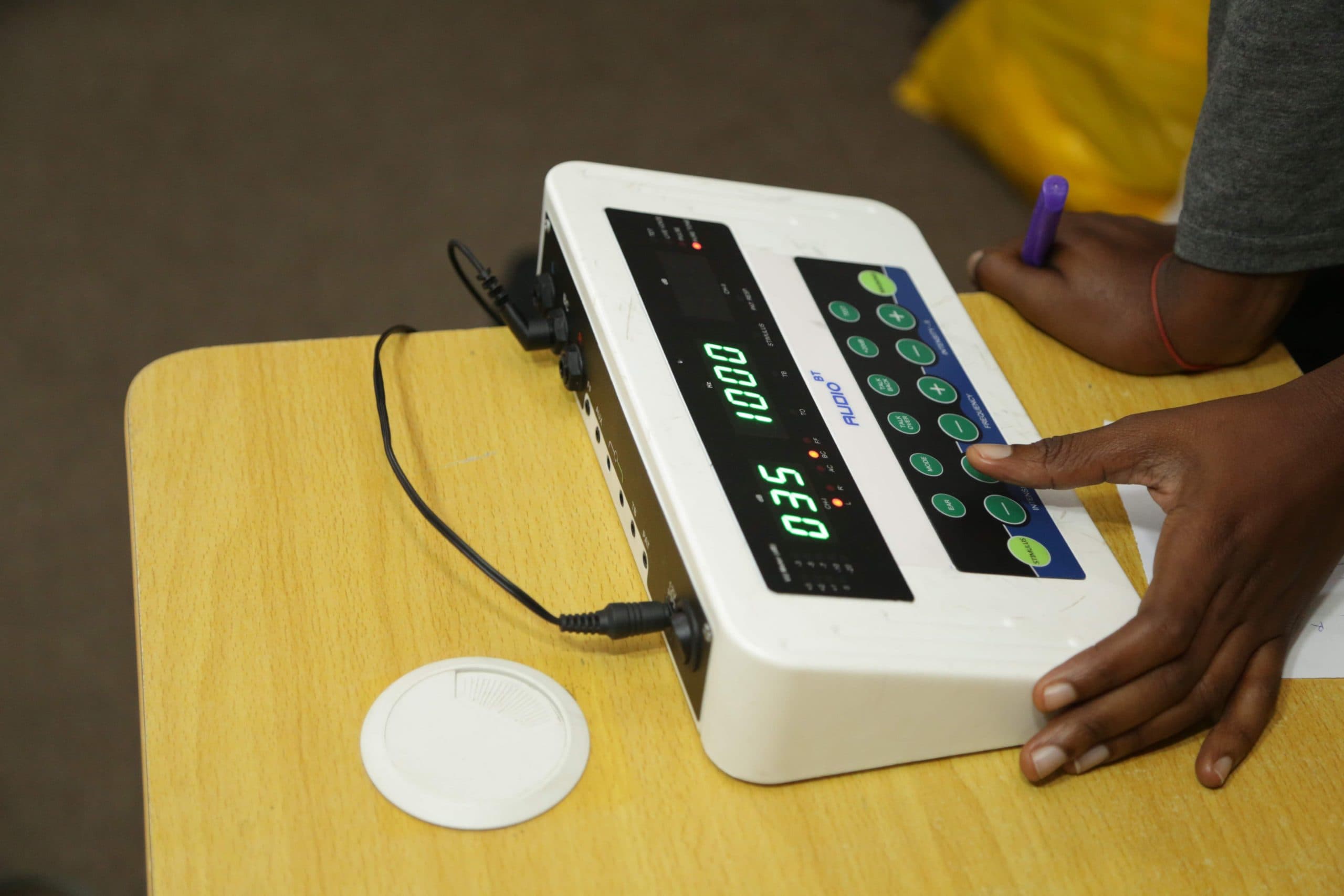
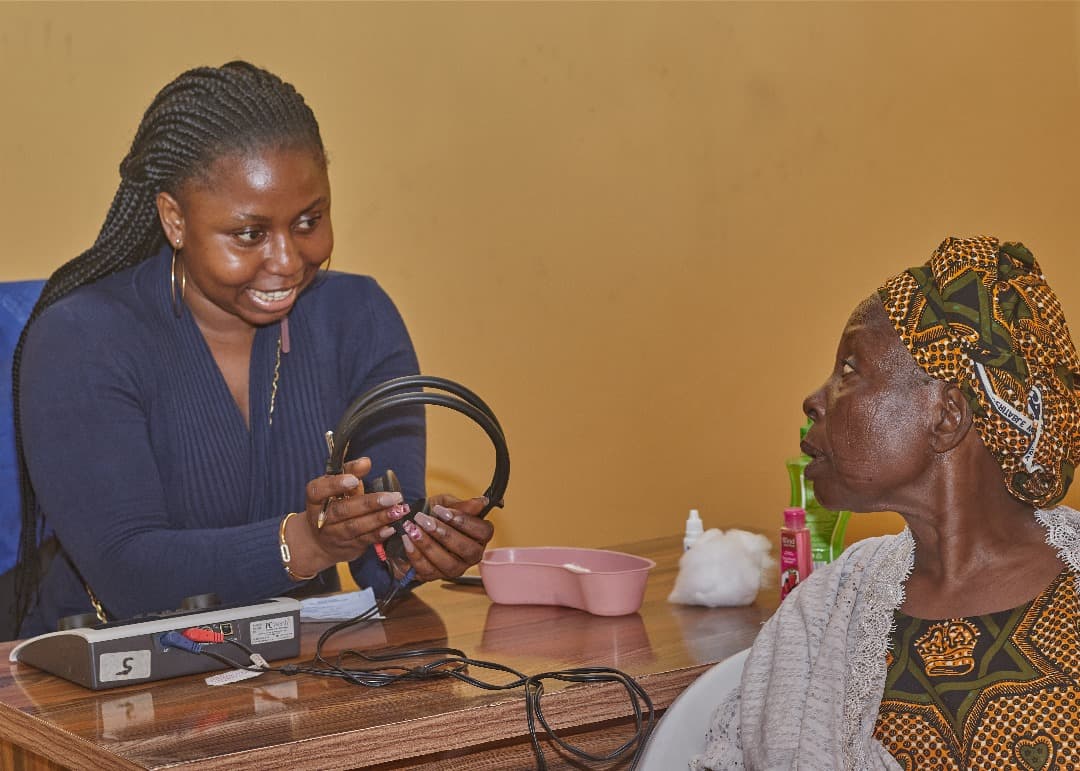
If your work involves regular noise, book a hearing test before problems appear. A baseline gives you and your employer a reference point, and periodic retesting detects change while it is still small — and while the environment can still be made safer.
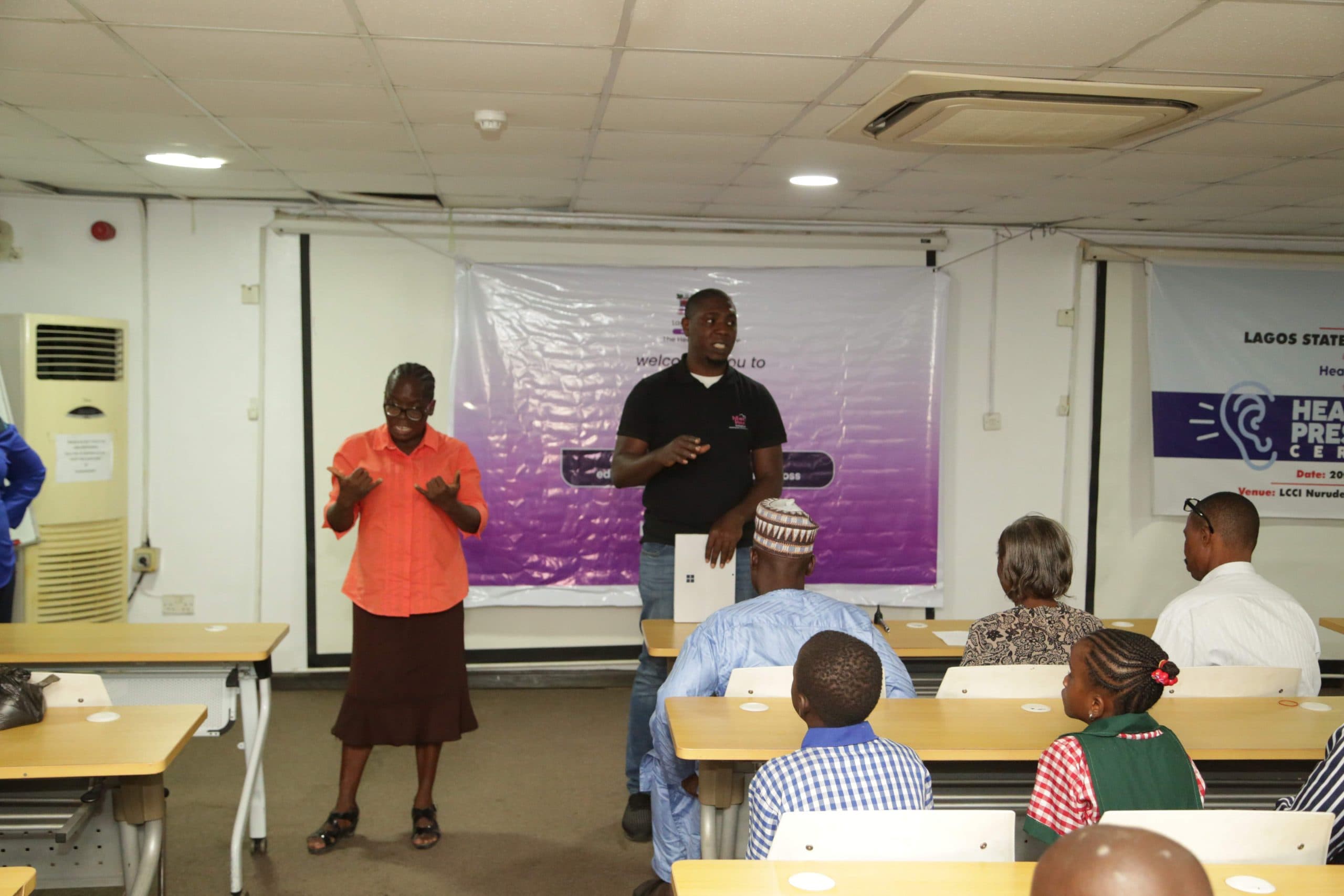
This is exactly what workplace screening programs are for: schools, factories, offices and other organisations benefit from organised screening that identifies at-risk workers early and supports intervention before careers and communication are affected.
If you already have symptoms
Ringing after a shift, muffled hearing that recovers by morning, or difficulty following speech in noisy places are warning signs — not things to tough out. The ringing that fades overnight used to be temporary; eventually it may not fade at all. Getting tested puts information on your side.
Hearing, once lost to noise, does not grow back. Protection costs a few hundred naira and a habit; recovery costs years of adaptation. If your work is loud, protect your ears today — and if you'd like screening for your team, our screening programs can come to you.
More articles
Keep reading
Ready to take the first step towards better hearing?
Book a free consultation today — or get weekly hearing & speech tips on WhatsApp.