
Health · 18 September 2026
Signs You Might Need a Hearing Test
By the HearMax Centre team

Hearing loss rarely happens overnight. It develops over months or years, and the brain quietly compensates: you turn up the television, you lip-read without realising it, you nod along in conversations you only half followed. Because the change is so gradual, family members often notice it before you do.
A hearing test is painless, takes about an hour, and gives you a clear picture of where you stand. Here are the signs that it is time to book one.
Everyday signs to watch for
You keep asking people to repeat themselves. Not occasionally — constantly. Phrases like "eh?" or "sorry, what did you say?" becoming your default is one of the earliest and most reliable signals.
Background noise makes conversation impossible. Following a discussion at a party, in a restaurant or in a busy clinic becomes exhausting. If you understand people fine in a quiet room but struggle when there is noise around, that pattern is characteristic of hearing difficulty.
The television volume is a source of conflict. If others in the room complain that the volume is too high — or you can't follow the news unless it's turned up — it's worth checking.
You miss sounds you used to notice. The doorbell, the phone ringing, birds in the morning, a child calling from another room. Small daily sounds disappearing often creeps in unnoticed.
You feel tired after conversations. Straining to hear takes real mental energy. If social situations leave you drained rather than energised, that fatigue is a clue.
Sounds seem muffled or dull. Speech may sound like people are mumbling, even when their voices are loud enough. High-pitched sounds — women's and children's voices, birds, the "s" and "f" consonants — lose their crispness first.
Ringing, buzzing or hissing in the ears. Tinnitus frequently accompanies hearing loss. It doesn't always mean damage, but it justifies a check-up.
You avoid situations because of hearing. Skipping church, meetings, family gatherings or phone calls because following them has become difficult — withdrawal is one of the most harmful adaptations, because isolation itself affects wellbeing.
Who should get tested?
Everyone can benefit from a baseline test, but it matters most if you:
- Are exposed to loud noise at work or through hobbies (generators, grinding, power tools, motorcycles, live music)
- Frequently listen to audio through earphones at high volume
- Have had repeated ear infections, pain, discharge or sudden changes in hearing
- Have a family history of hearing loss
- Have conditions associated with hearing change, such as diabetes or high blood pressure
- Are 50 or older — and older adults should test annually
Children should have their hearing checked whenever speech or school performance raises a concern — earlier is always better.
What happens during the test?
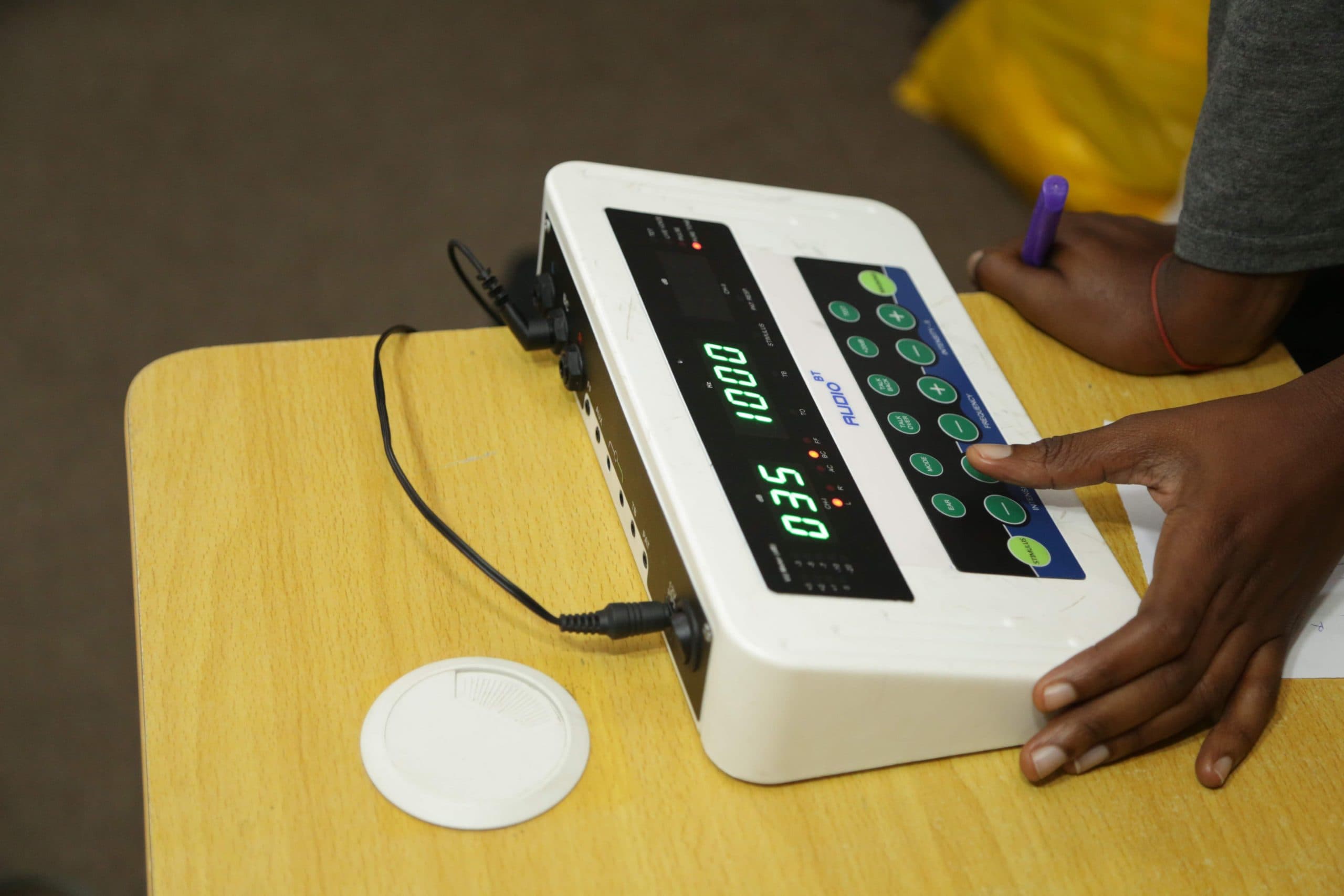
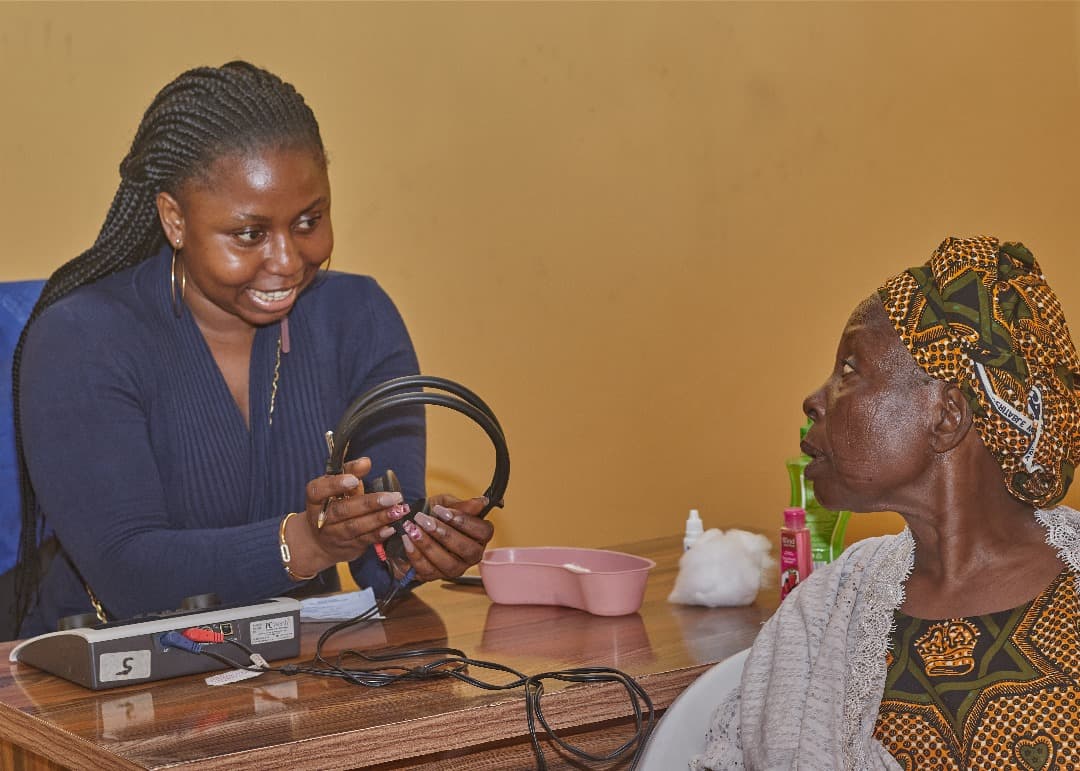
A hearing evaluation usually includes a look inside the ear with an otoscope, pure tone audiometry (responding to tones through headphones), and sometimes tympanometry or otoacoustic emissions to check how the middle ear and inner ear are responding. You receive a clear result: the type of hearing loss, if any, and its degree.
If something is found
The most important thing to understand is that a result is a starting point, not a verdict. Many people put off testing because they fear what they'll hear. But knowledge gives you options — protective strategies, therapy, or amplification — and the earlier a change is addressed, the less work your brain has to do catching up.
If you recognise a few of the signs above, don't wait for them to get worse. Book a free consultation with our team and take the first step towards clearer hearing.
More articles
Keep reading
Ready to take the first step towards better hearing?
Book a free consultation today — or get weekly hearing & speech tips on WhatsApp.